Author
Carolyn Gjerde
Part 3 of a series on Skills in Copilot in SharePoint. Start with Extending AI in SharePoint with Skills or read Getting Started with Skills.
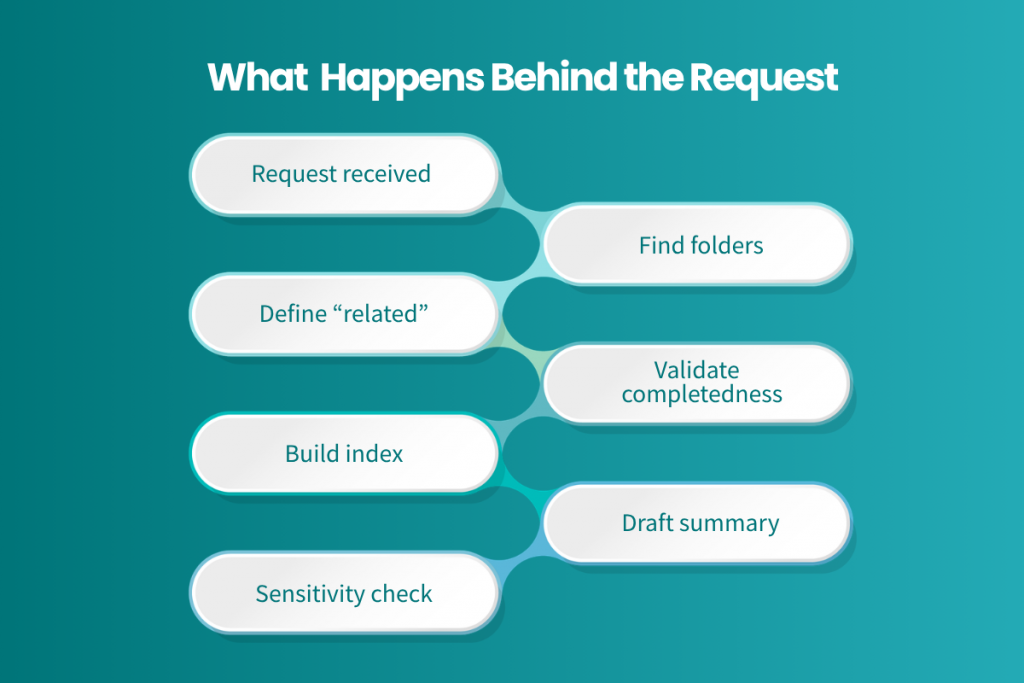
Picture this: it's 9:08 a.m., and a team inbox lights up with a request that sounds simple. "Please provide all records related to X." In reality, it triggers a chain reaction: find the right folders, confirm what "related" means, validate completeness, build an index, draft a summary brief, and make sure nothing sensitive is accidentally shared.
That process exists in most organizations. The question is whether it runs the same way every time, or whether it depends on who's handling the inbox that morning.
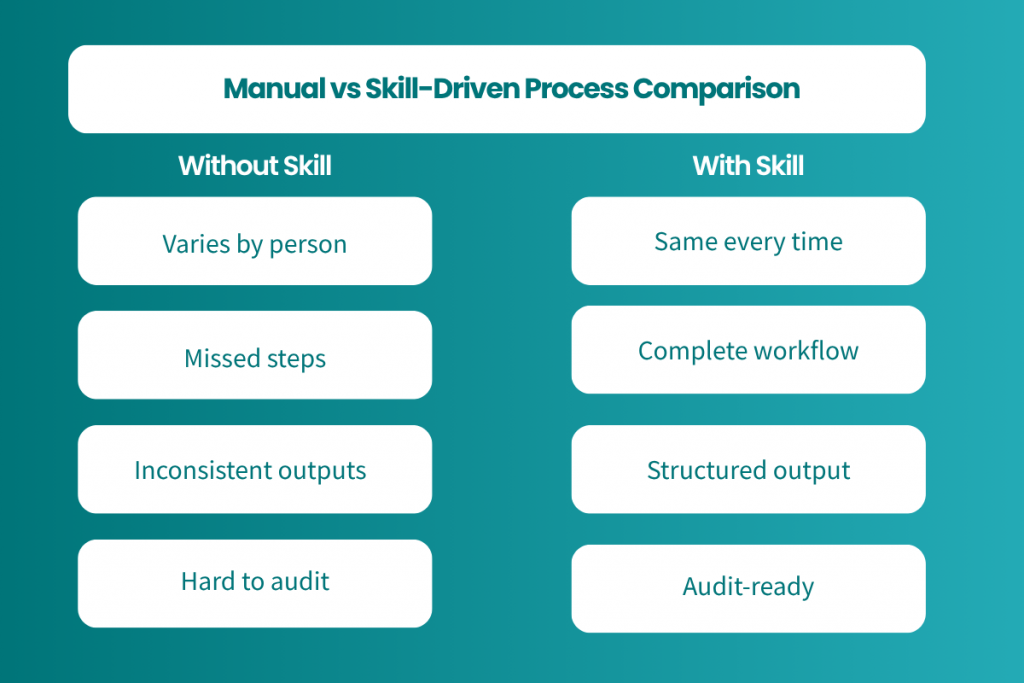
For many teams, the honest answer is: it depends. The process works when the right person is available, when they remember to use the template, when they've been around long enough to know the nuances. It's fragile in ways that are easy to overlook until something goes wrong.
Why Consistency Matters More in Regulated Industries
For organizations in highly regulated environments like government, legal, and financial services, that fragility carries more weight. In these verticals, the process isn't just how work gets done. It's the compliance mechanism. And anything that makes it more reliable reduces exposure.
That's what Skills in Copilot in SharePoint does. It takes a process your team already owns and makes it executable rather than just documented. The steps don't live in someone's head anymore. They run the same way, every time, for every person on the site, governed by the same controls your team already manages in SharePoint.
Public Sector: When Timelines Are Non-Negotiable
Consider a team that handles access to information requests. The work is well-defined: identify records, validate completeness, log what was found, summarize, flag gaps, ensure nothing sensitive is inadvertently included. Federal institutions operating under access to information legislation, such as Canada's Access to Information Act with its 30 calendar day response requirement, run this process repeatedly, against a hard deadline, with accountability for every step.
The process exists. The problem is that it runs differently depending on who's handling the request that week. One person's summary is structured differently than another's. Metadata gets flagged inconsistently. The briefing note looks different every time.
A Skill built for this work runs the same process every time. It indexes candidate documents, surfaces missing metadata, flags records that may require exemption review, and produces a structured briefing note for reviewers, all within the permissions of the person running it. The output is consistent and defensible in a way that a process dependent on individual habit simply isn't.
The same logic applies to policy publication. A Skill that checks whether a policy draft includes required sections, confirms version and date fields, and flags metadata gaps before the document goes out enforces a standard that would otherwise depend on whoever happened to review it that day.
Legal Teams: Making Process Knowledge Scalable
Legal teams are already process-heavy. The challenge is that the processes often live across emails, precedent folders, and individual habits rather than somewhere the whole team can reliably access and follow.
Skills give that knowledge a permanent, executable home.
Contract triage is a natural fit. A Skill that produces a standardized intake memo covering key terms, unusual clauses, missing sections, and a next-steps checklist means every contract gets the same initial review regardless of who runs it. The output is consistent, structured, and reviewable.
Client onboarding is another strong example. Where explicit client identification and recordkeeping obligations apply, such as those set out by Canadian law societies, a client intake Skill can confirm that required artifacts are present in the matter site: identification and verification records, source-of-funds documentation, engagement letter versions. It produces a compliance checklist summary without the AI stepping outside the permissions of the person running it.
The Skill doesn't replace the lawyer's judgment. It handles the checklist so the lawyer can focus on the judgment.
Financial Services: Consistency That Holds Up in an Audit
Financial services operates under structured oversight, and third-party risk is one of the areas where that oversight is most clearly defined. In Canada, OSFI's Guideline B-10 on third-party risk management sets out explicit governance and risk management expectations for federally regulated financial institutions. In the US, requirements under SOX and SEC recordkeeping rules create similar accountability for how vendor relationships are documented and reviewed.
The work is the same in both contexts: gather the right artifacts, identify gaps, produce documentation that holds up to scrutiny. A vendor due diligence Skill can confirm required documents are present (SOC reports, insurance certificates, contract addenda), generate a tracker with renewal dates, owners, and status, and produce a standardized summary for review committees.
The output lands in SharePoint, governed by your existing compliance policies, structured the same way every time.
That consistency matters more than it might seem. Audits reward consistency. Not just having the right documents, but having them organized the same way, with the same headings, the same traceability, the same storage location. A Skill doesn't just help you do the work. It helps you show the work.
The Governance Question
A reasonable concern in any regulated environment is whether a new capability creates new governance risk. With Skills, the answer is straightforward.
Skills are stored as files in your SharePoint site's Agent Assets library. They are subject to the same permissions, retention policies, sensitivity labels, and audit logs as everything else in your environment. There is no separate system to govern, no new control framework to build.
And a Skill can only do what the person running it is already allowed to do. If a document is outside a user's permissions, the Skill cannot access it. The governance boundary is already there.
Where to Start
The 9:08 a.m. request is going to keep coming. The opportunity is to make sure the process behind it is:
- Repeatable
- Structured
- Defensible
The right first question isn't which Skill to build. It's whether your Microsoft 365 environment is ready to support Skills properly. If you're evaluating that question, our Copilot Readiness Assessment is designed to give you a clear, honest picture of where you stand.
Start Your Readiness Assessment
Related reading: