Author
Kunaal Sharma
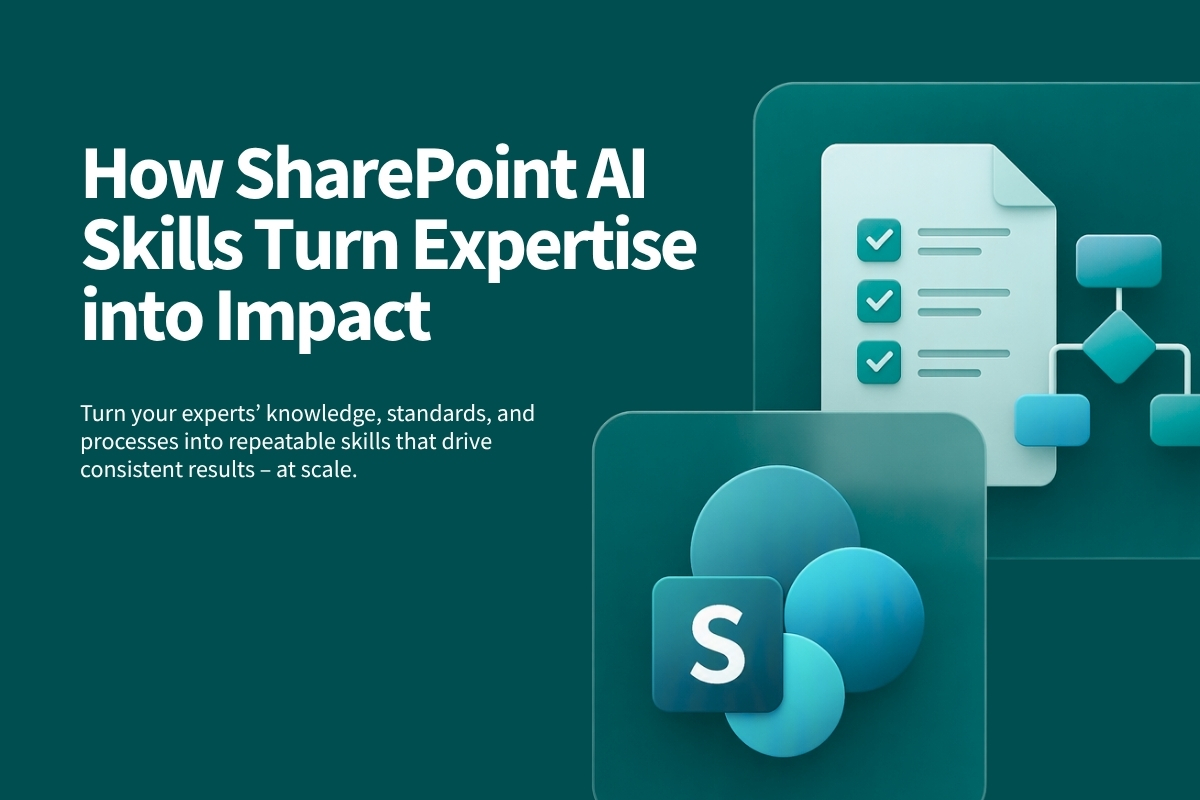
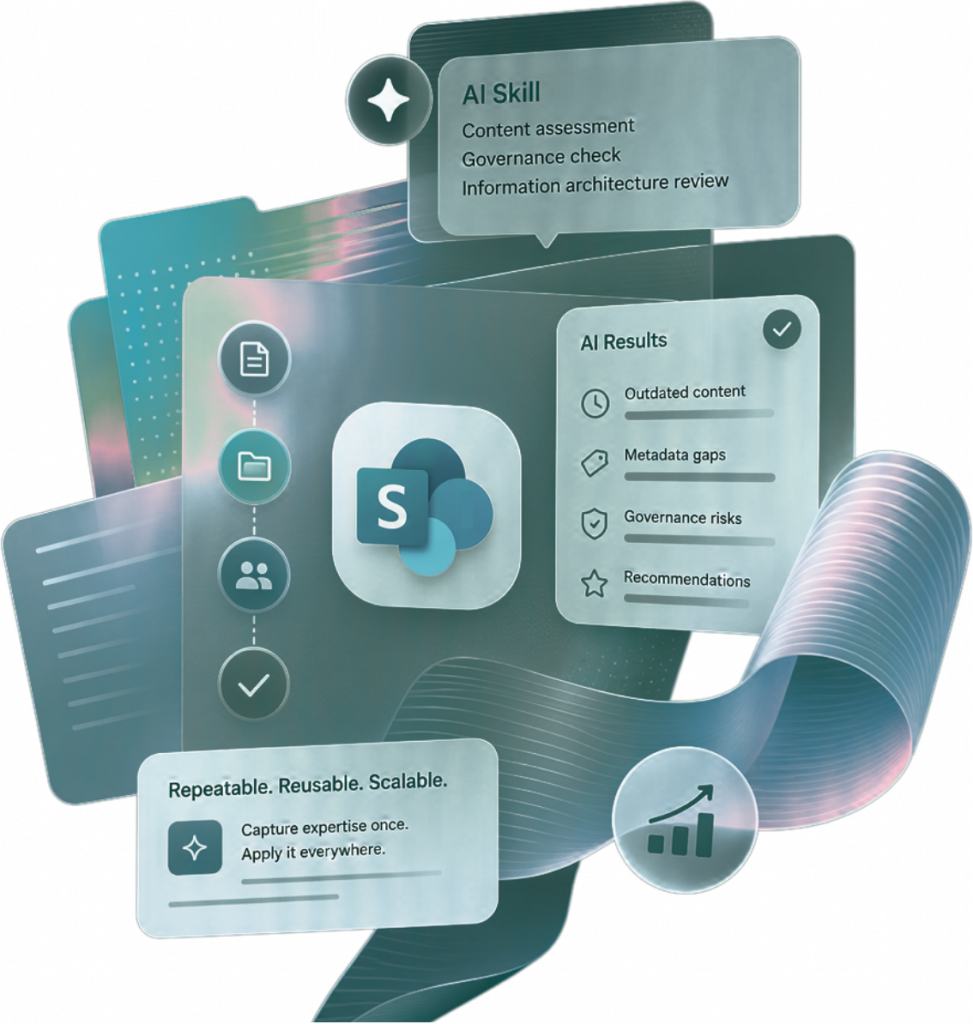
Organizations seeing the most value from SharePoint AI Skills are not using them to replace expertise. They are using them to scale it.
Here at Creospark, we’ve been exploring SharePoint AI Skills in close collaboration with Microsoft community leader Gokan Ozcifci, our MVPs Eric Overfield and Noorez Khamis, and our development team lead Corrie Haffly. Together, we’ve been building and testing practical skills around real business challenges. From content reviews and migration readiness to information architecture, governance, and knowledge management.
What this work has reinforced is simple: SharePoint AI Skills are not just about helping people work faster. They are about turning knowledge, standards, and repeatable processes into something the entire organization can use.
Gokan recently highlighted how SharePoint Skills can support migration-related work by capturing knowledge and making it reusable across projects. That observation aligns closely with what we have been seeing as organizations begin experimenting with Skills in AI in SharePoint.
Expertise Does Not Scale
Every organization has experts.
- The migration specialist who knows how to assess content quality.
- The information architect who understands metadata and taxonomy.
- The records manager who can identify governance risks.
- The communications lead who knows how content should be structured for findability and Copilot.
The problem is not a lack of expertise, it's that expertise often lives in the minds of a handful of people. When every review, assessment, recommendation, or decision depends on a subject matter expert, organizations struggle to scale knowledge across teams, departments, and projects.
What Makes SharePoint AI Skills Different?
Skills focuses more on the processes instead of what most AI conversations focus on, which is prompts. A SharePoint Skill allows organizations to capture a repeatable workflow and make it reusable by others. Instead of asking employees to recreate the same process repeatedly, organizations can package expertise into a repeatable capability. That is an important shift from getting better responses to how do we help more people benefit from those subject matter experts.
From Hours to Minutes
Consider a migration project. A content assessment may involve:
- Reviewing documents
- Identifying outdated content
- Evaluating metadata
- Assessing information architecture
- Determining what should be retained, archived, or removed
Traditionally, this work relies heavily on experienced resources. But when that expertise is captured as a SharePoint Skill, teams gain access to a repeatable approach that can be applied consistently across projects.
The result is not just faster execution. It is more consistent execution. And consistency is often where the real organizational value comes from.
Turning Knowledge into Capability
The most compelling Skills are not focused on generic AI tasks. They are focused on helping organizations scale expertise in areas such as:
- Information Architecture Reviews
- Metadata Recommendations
- Content Quality Assessments
- Governance Validations
- Knowledge Management
- Document Analysis
- Content Creation
- Content Standardization
That is the difference between automating a task and building organizational capability.
Building a Library of Real-World Examples
As we have explored SharePoint AI Skills with partners, customers, students, and community leaders like Gokan, we have also been building a growing library of SharePoint AI Skills to demonstrate practical implementation patterns and business use cases.
The goal is to help organizations understand what becomes possible when expertise is transformed into something reusable. Because ultimately, the most valuable SharePoint Skill is not the one that saves a few minutes. It is the one that helps your organization consistently apply its best knowledge, standards, and practices at scale.