Author
Kunaal Sharma
Every client knows this well: they send an email asking for a status update on their matter, wait two days, only to receive a five-line reply that answers half their question. They call the front desk. They leave a voicemail. They follow up again because without a centralized law firm client portal, visibility into their own case is limited to chasing updates.
That friction is invisible from inside the firm but deeply felt from outside. In an industry where trust is the product, those moments quietly erode confidence, long before legal expertise ever comes into question.
A 2024 Clio secret shopper study covering 500 U.S. law firms found that nearly half were effectively unreachable. Only 1 in 3 responded to emails from prospective clients, and fewer than half answered the phone. Nearly three‑quarters of secret shoppers said they would not recommend the firms they contacted.
Microsoft Power Pages offers legal firms a way to close that gap, not through a costly rip-and-replace system or a six‑figure platform, but through a secure, branded client portal built on Microsoft’s Power Platform. Teams can configure and evolve experiences using low-code tools, while still maintaining governance, security, and compliance standards expected in a legal environment.
The modern client has modern expectations
Clients manage nearly every part of their lives digitally, and legal services are increasingly judged by the same standard. According to Gavel’s 2024 Legal Tech Trends Report, 69% of consumers prefer working with a lawyer who can share documents electronically through a web page, app, or online portal. And with over 90% of potential clients researching law firms online before making contact, firms that provide a structured digital experience earn trust faster and set the tone for the entire engagement.
Clio’s research also found that solo firms using client portals, electronic payments, and digital intake tools generated materially higher revenue than those that did not, on average nearly $28,000 more annually. Industry research shows that clients increasingly expect transparency, secure access to documents, and fewer points of friction across the client lifecycle.

The hidden cost of manual client communication
Without a user-friendly digital portal, lawyers lose time to emails, document chasing, intake follow‑ups, and billing clarifications. These add up quickly and directly impact profitability. On the flip side, technology providers consistently note across the legal industry that these same factors drive client frustration; missed updates, unclear next steps, and documents scattered across emails and inboxes derail the trust clients have in their lawyers.
But what if clients could have a way to interact with their lawyers securely and consistently?
What Power Pages enables for law firms
Microsoft Power Pages gives firms a way to build a secure, branded client portal on Microsoft’s Power Platform — without a rip-and-replace platform or a custom web development program.
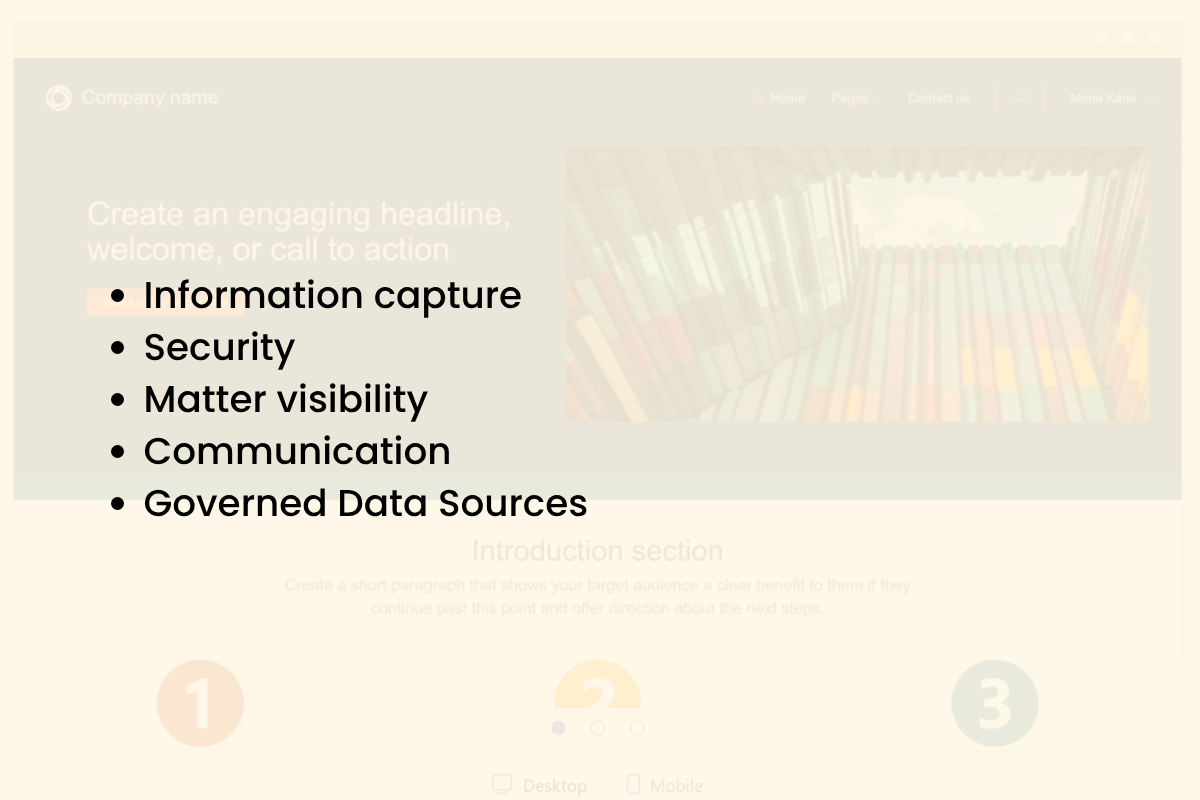
Done properly, a portal becomes operational infrastructure: a consistent, governed way for clients to interact with the firm across key moments, including:
- Client intake & structured information capture
- Secure document exchange
- Matter visibility (at the level the firm chooses)
- Structured communication that reduces ad hoc follow-ups
- Integration to governed data sources (Dataverse / SharePoint / workflow automation) so the portal isn’t “another place to update”
Instead of email acting as the system of record, the portal becomes the controlled front door and email becomes the exception.
Security as a differentiator
Power Pages is built on Microsoft’s enterprise security foundation, and firms can apply controls aligned with legal expectations: role-based access, identity management, auditing, and governance guardrails.
The most important point for a managing partner is this:
We decide what clients see, when they see it, and how it’s presented, and ethical boundaries are built into the design.
Where Creospark fits
Creospark supports law firms by designing Power Pages portals that reflect how legal work actually flows: intake, matter execution, document handling, and controlled client communication, while building in the security and governance legal organizations require. We understand that a client portal is more than just a web site, but it’s a client-service operating model implemented through the technology you already trust.
Creospark’s services explicitly include information barriers and ethical walls, M365 security hardening, and governance and compliance controls (e.g., DLP/retention) — all of which are directly relevant to how a portal must operate in a law firm.
Build a client portal your firm can stand behind
Client portals are no longer a differentiator, they’re an expectation. The firms getting this right treat portals as operational infrastructure, not websites. Creospark helps law firms design Power Pages solutions that balance client experience, internal efficiency, and enterprise‑grade governance.
Connect with us to discuss a smarter approach to client portals.