Author
Prem Chandran
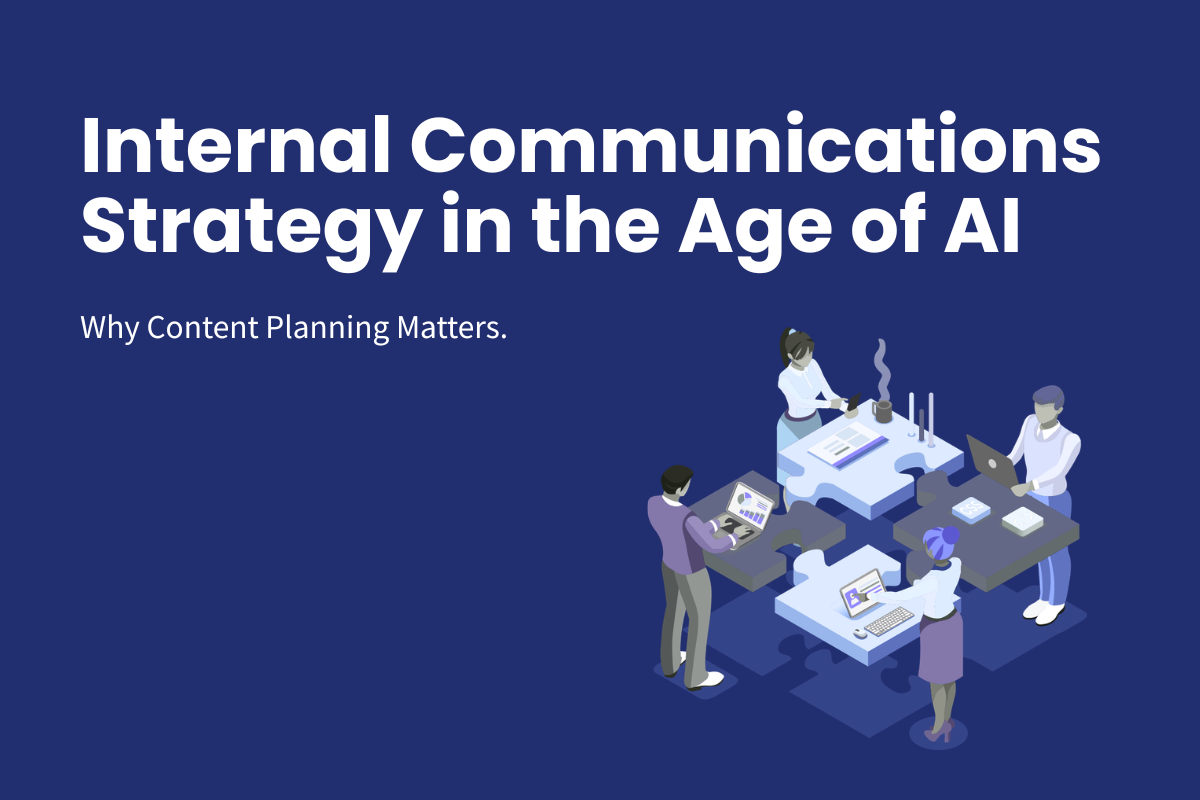
Internal communication has always been about helping people understand what matters, what’s changing, and what they need to do next. But that job is getting harder.
Employees are navigating more channels, more content, and more noise. At the same time, communicators are being asked to move faster, support change, and keep messaging clear across the organization. Today, the intranet acts as a central communication hub and not just a place to store information, but a place that makes communication easier to find, easier to trust, and easier to act on.
Now, this is expanding.
With Microsoft 365 Copilot drawing from content across SharePoint, OneDrive, and Teams, employees are no longer just reading pages, they’re asking questions and expecting immediate, accurate answers. Copilot isn’t generating those answers from scratch. It’s retrieving, interpreting, and summarizing the content that already exists within your environment, grounded in permissions and governance. This shift changes how internal communication works.
Your content is no longer consumed one page at a time. It’s being surfaced in fragments, reused in context, and relied on to answer real-time questions. Which means the impact of your communication doesn’t just stop at publish, it continues wherever and however that information is pulled forward.
So, the question becomes: how do you make intranet content usable for both your employees and Microsoft 365 Copilot?
Your content now has two audiences
For years, internal communicators have focused on the employee experience: writing useful updates, organizing news, supporting initiatives, and reducing confusion. That still matters. But AI introduces a second audience.
When employees use Copilot to ask questions, generate content, or summarize information, the quality of the response depends on the quality of the content behind it. SharePoint itself is evolving to support this shift, with AI-assisted authoring, templates, and content refinement features becoming part of how communication is created.
Internal communication is no longer just about delivery. It's about reuse. That raises the bar for strategy.
Why “publish and move on” no longer works
A lot of internal communication still follow a reactive pattern:
- A request comes in
- A message gets written
- A page goes live
- And the team moves on
This approach was already under pressure because employees expect communication to be easy to find, timely, and relevant. When the content doesn’t fall into those categories, trust erodes quickly and employees stop reading. AI amplifies these gaps.
If content is inconsistent, buried, duplicated, or lacking context, it becomes harder for employees to navigate and harder for AI to surface meaningfully. A “single source of truth” helps reduce version confusion. This is only possible when content is maintained, relevant, and structured well.
Example: An employee asks Copilot, “What’s our process for approving a new vendor?” If the answer pulls from three conflicting pages (one from 2021, one draft, one current), the response is confusing at best, harmful at worst. The content problem now becomes a trust problem.
Publishing is no longer the finish line. Your content now needs to be treated as something that will be revisited, reused, and reshaped over time. This means thinking beyond the moment a page goes live, and designing content to stay accurate, structured, and useful long after it’s published.
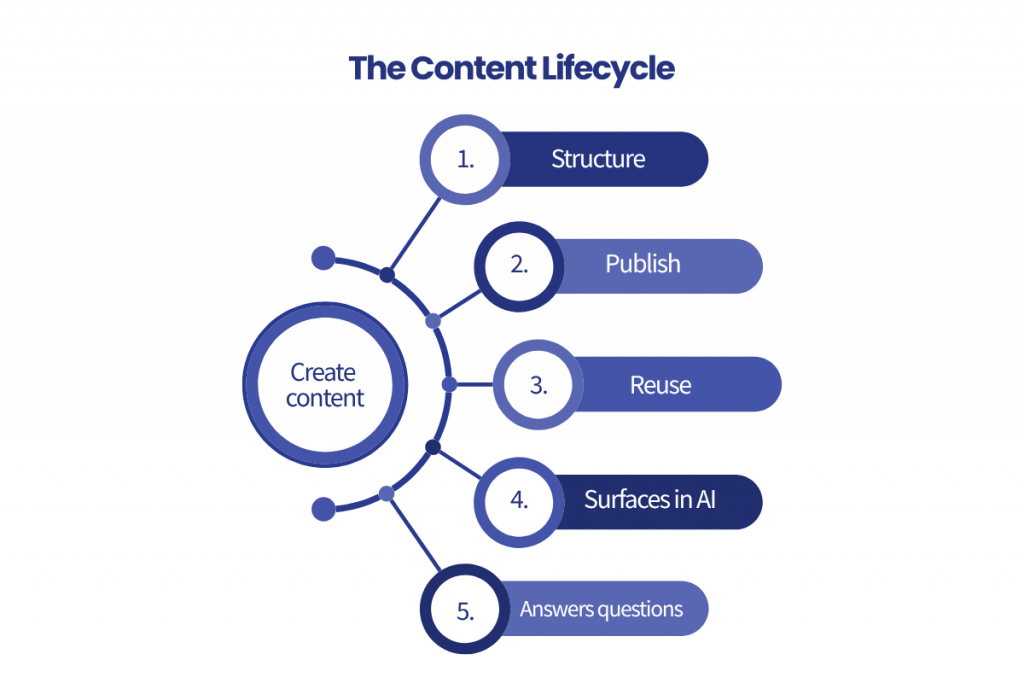
What a stronger strategy looks like now
An internal communications strategy needs to do more than fill channels. It should help your organization answer four practical questions:
- What information truly deserves a durable home?
Not every message needs tolive forever. But high-value content such as policies, strategic priorities, leadership guidance, campaign explainers, and team resources should exist somewhere employees can reliably return to. - Is the content written for clarity, not justcompleteness?
Too much internal content says everything but clarifies very little. The goal is to reduce interpretation effort. People should quickly understand what the message means, why it matters, and what to do next. - Can someone find it later?
If important content is buried in email threads or spread across disconnected spaces, trust breaks down. Employees stop knowingwhat's current. Communication hubs only work when content is easy to find, intuitive to navigate, and embedded where people work. - Can AI make sense of it?
This isbecoming an increasingly important question. As Copilot becomes part of the Microsoft 365 experience, content needs to be structured, clear, and maintained well enough to support accurate retrieval and meaningful reuse.
The opportunity for internal communicators
This shift isn’t a threat to internal communications but reinforces its value.
Internal communicators already think about audience, clarity, timing, and trust. Those same disciplines are exactly what organizations need to make their intranet content and the AI experiences built on top of it more effective.
There’s also real urgency. Recent research shows that less than a third of non-desk employees are satisfied with internal communication, and poor communication plays a role in employee turnover. That’s not a publishing problem; it’s a communication design problem.
AI can’t fix an unclear strategy. But it will amplify a strong one.
Start with three shifts
If you’re rethinking your approach, start here:
- Shift from channels to journeys.
Instead of asking where a message should be posted, ask how employees will encounter it, understand it, revisit it, and act on it.
- Shift from one-off publishing to reusable knowledge.
Treat high-value communication as content that should remain useful beyond the announcement moment.
- Shift from volume to structure.
More content doesn't improve communication. Better structure, clearer ownership, and intentional content design do.
Organizations that get the most from AI won't be the ones producing the most content. They'll be the ones with clearer, better-structured, more trustworthy content behind the scenes. For internal communicators, that's a great opportunity. This isn't just about adopting new tools. It's about strengthening the communication system these new tools depend on.
This is a shift that takes time, and it rarely happens in isolation. Organizations that do it well usually have someone helping them see the content system clearly – what's working, what's creating confusion, and where to start.