Author
Kunaal Sharma
Goodbye iManage? That question may sound dramatic, but it is becoming harder for law firms to ignore.
Vibe coding lowers the cost of experimentation in legal technology. For firms that are already investing in Microsoft 365, this shift is less about replacing vendors and more about rethinking which workflows truly require them. Many legal teams can now design, test, and govern workflows internally using systems they already trust.
It’s remarkable how subtly this shift has taken place.
A Quiet Shift in Legal Technology
At the start of 2026, legal technology began to evolve in a noticeable way. The shift wasn’t driven by a new vendor or product launch, but by a change in how software is created and used. The line between those who use legal tools and those who build them started to blur.
With the rise of AI-assisted tools, lawyers, legal operations teams, and in-house professionals can now create and test workflow-specific solutions on their own. What once depended on long development cycles and external budgets can now be done faster, using platforms they already rely on daily.
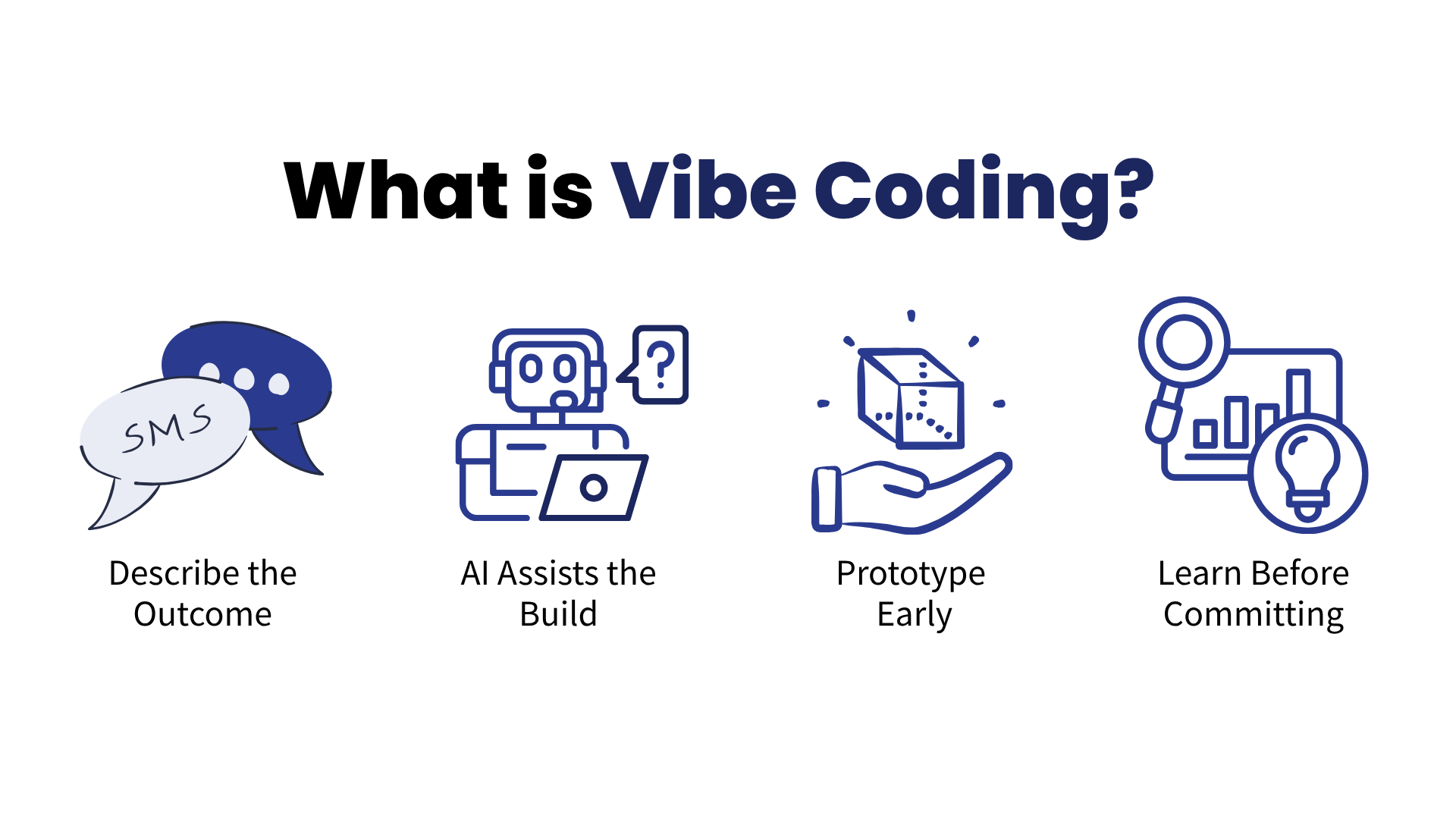
This approach is often referred to as “vibe coding,” a term introduced by AI researcher Andrej Karpathy. It describes the process of building software by simply outlining desired outcomes in natural language and refining them with AI support. In legal environments, the real advantage isn’t just speed, it’s the ability to experiment and learn early. When lawyers can prototype workflows themselves, they gain a clearer understanding of what works before committing to full-scale implementation.
A Real-World Example: When Lawyers Build
In early 2026, Jamie Tso, a senior associate at Clifford Chance, how he built internal legal AI and workflow tools using Microsoft Copilot Studio and Power Automate, both already included in the firm’s Microsoft 365 setup. He focused on routine, repetitive tasks and built solutions within the firm’s existing governance framework. Many of these tools were quickly adopted across teams, with their value coming from how well they aligned with real legal workflows rather than technical sophistication.
This trend extends beyond individual efforts. Debevoise & Plimpton, for example, created an internal AI training game to encourage adoption of its AI policy, which later evolved into the firm’s AI Decathlon program. In both cases, the takeaway is clear: firms can develop focused, internal tools safely and effectively without needing to replace their core systems.
Beyond iManage: A Broader Legal Tech Reassessment
Taken together, these examples point to a broader reassessment of legal software. As AI reduces the scarcity of development capacity, firms are rethinking tools purchased under assumptions that no longer hold.
The question is shifting from what a platform can do to which workflows truly require a vendor, and which simply need thoughtful design.
Where the Risks and the Value Are Real
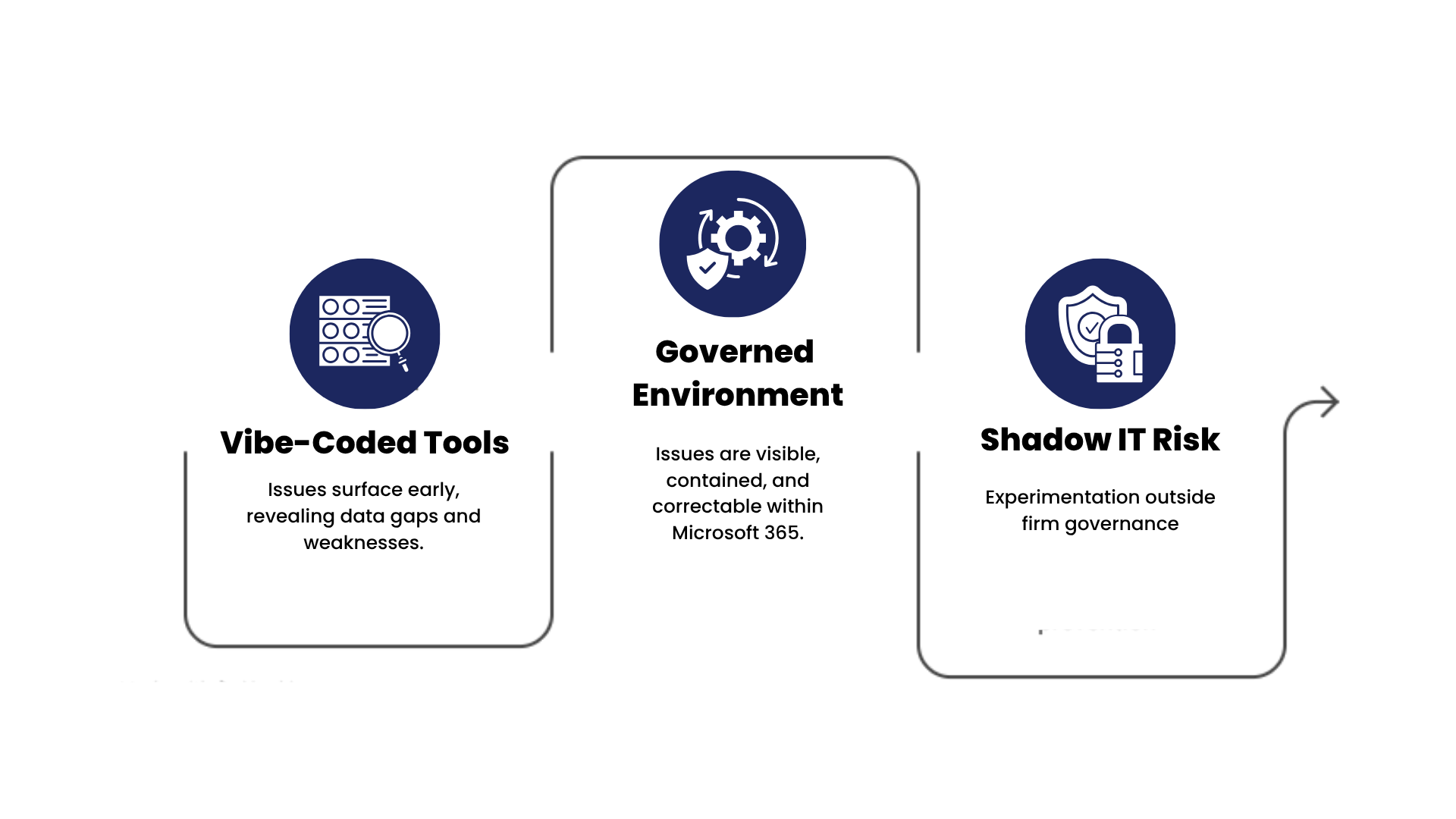
Vibe-coded tools surface issues quickly. They can hallucinate, expose weak data discipline, or reveal gaps in structure. That is not failure. It is useful feedback.
Problems arise when firms move too quickly without guardrails. Teams that benefit treat experimentation as part of their operating model, not a workaround. Inside a governed Microsoft 365 environment, missteps are visible and correctable.
Shadow IT remains the largest concern. Tools built outside firm infrastructure put client data and accountability at risk. A governed sandbox, managed by IT with clear data loss prevention policies, allows teams to experiment safely.
Design discipline matters more than speed. Internal tools built on weak SharePoint foundations tend to decay over time. Investing upfront in information architecture, documentation, and governance is what determines whether solutions last.
Accountability does not disappear. Lawyers and their team remain responsible for the tools they use. AI reinforces the need for rigour, testing, and clear ownership.
Why This Matters for Legal Leadership
Legal leaders are balancing innovation with professional responsibility. Vibe coding sharpens that challenge. Successful leaders will not chase every new tool. They will invest in architecture, governance, and internal capability that allows teams to experiment safely and make informed decisions.
How Creospark Helps Legal Teams Navigate This Shift
Creospark works with law firms and in-house legal teams to turn this shift into a lasting advantage. We help identify which workflows are worth building, design them properly inside Microsoft 365, and put the right governance in place.
Our role isn’t to replace existing platforms or promote new ones. It’s to bring clarity—so technology decisions are based on real usage, real risks, and meaningful outcomes.
“Goodbye iManage?” isn’t a prediction. It’s a question legal teams are now better equipped to ask. The firms that gain an edge will be those that understand their workflows deeply, experiment with care, and build what they need in a controlled, intentional way.
Vibe coding doesn’t eliminate the need for discipline. It reduces friction, making it easier to translate well-designed workflows into functional tools using technology firms already own. Let’s be clear, iManage will continue to play an important role for many firms. But those that define their needs clearly and build within a governed Microsoft environment gain more than efficiency.
They gain control.
And in today’s environment, that control is a real advantage.