Author
Prem Chandran
Most managing partners, general counsel, and legal operations leaders aren’t asking whether AI is powerful. They already know it is. The real concern is simpler and more serious: Can we use AI without putting client confidentiality, ethical walls, or professional responsibility at risk?
In law, trust is the business. One breach, one accidental disclosure, or one ethical wall failure can undo decades of reputation. That’s why AI adoption in legal can’t follow the same playbook as other industries.
Legal professionals are among the earliest adopters of generative AI not because it’s trendy, but because the potential to save time on routine tasks is enormous. According to industry research, 79% of legal professionals now use AI tools to assist with tasks like document review, legal research, and discovery.
Firms that adopt AI strategically are already reporting 3.9x more business benefits than firms without formal AI plans, illustrating the competitive gap emerging in the market. But with this opportunity comes a critical question for law firm leaders:
How can we unlock these productivity gains without exposing confidential information or violating ethical walls?
Confidentiality Comes First
Legal work is built on privilege. Documents, emails, research notes, and strategy discussions are not just “files”; they are protected assets tied to specific clients and matters. Any AI introduced into this environment must respect those boundaries by default, not as an afterthought.
With Microsoft 365 Copilot, confidentiality is not handled through vague promises or training reminders. Copilot operates entirely within your existing Microsoft 365 security and permission structure. If a lawyer cannot access a matter manually, Copilot cannot surface it either. This is critical for legal decision-makers who need assurance that AI will not blur lines between clients, practices, or teams. AI usage studies show widespread adoption within legal work without compromising internal controls when governance is configured correctly.
Ethical Walls Are Enforced, Not Weakened
Ethical walls are often discussed as policies, but in practice, they must be enforced technically. Copilot does not override ethical walls; it respects them.
In traditional setups, these walls are policies and permissions, but with Copilot:
→ Permissions and sensitivity labels are enforced automatically.
→ Copilot won’t surface content outside approved matter scopes.
→ Outputs are traceable back to internal sources, no hidden data training.
For decision-makers, this means Copilot doesn’t introduce a new risk category. Instead, it exposes where ethical walls may already be weak due to inconsistent permissions or legacy document structures. In many cases, Copilot becomes the catalyst for finally fixing long-standing governance gaps.
Smarter Deposition Preparation Without Risky Shortcuts
Deposition preparation consumes enormous amounts of senior legal time. Reviewing transcripts, cross-referencing prior testimony, and pulling facts from discovery materials are necessary, but repetitive.
For example:
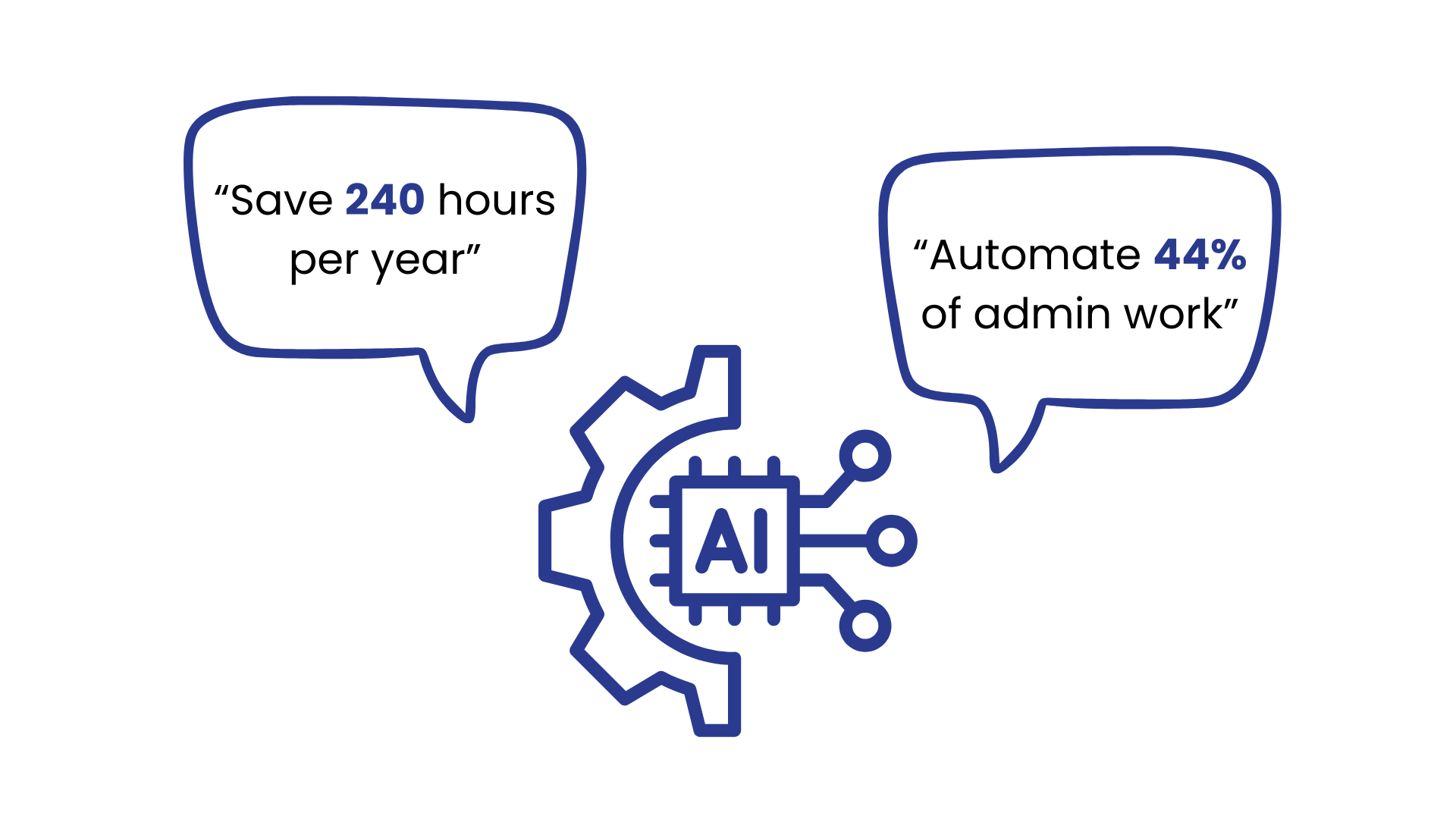
- AI tools have the potential to save lawyers nearly 240 hours per year by automating routine tasks like research and contract analysis.
- Goldman Sachs data suggests up to 44% of administrative legal work could be automated with AI, freeing lawyers to focus on strategy and client interaction.
Copilot can assist by summarizing deposition transcripts, highlighting key themes, and pulling relevant facts from matter-specific documents your team already has access to. Importantly, every output remains grounded in your own data and traceable back to source documents. There are no external model training and no uncontrolled data exposure. Lawyers stay in control, while preparation time drops significantly.
Safe, Faster Deposition Prep and Research
Deposition preparation and legal research are critical but often repetitive. Copilot can assist by summarizing transcripts, synthesizing case histories, and drafting first-pass outlines all based on internal, authorized data.
This accelerates prep without sacrificing accuracy, a key concern for risk-aware legal leaders. And with firms increasingly regulated around AI use, ensuring tools operate within established legal and ethical frameworks is essential. Recent regulatory attention (e.g., bills in the U.S. requiring verification of AI-generated content) highlights that lawyers remain responsible for what goes into court filings. AI is a helper, not a judge.
Where Most Firms Go Wrong with Copilot
The biggest risk with Copilot is not using it; it’s turning it on without preparation. Many legal organizations underestimate how much their current document structure, permissions, and metadata influence AI behaviour.
Without readiness, firms may discover:
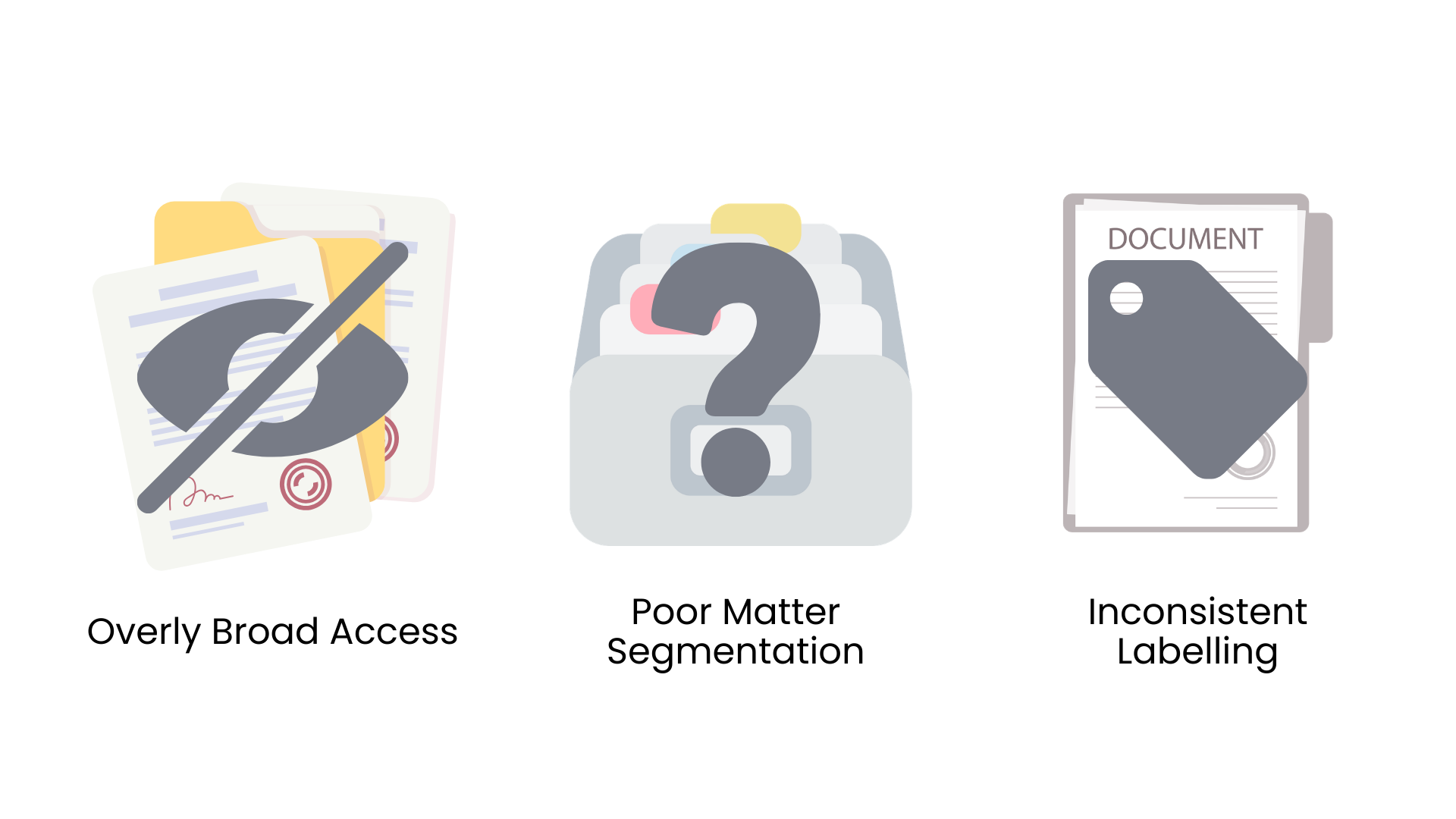
- Overly broad access to sensitive documents
- Poor matter segmentation
- Inconsistent labelling of confidential content
Copilot doesn’t create these issues; it makes them visible. That visibility is powerful, but only if leadership is prepared to act on it.
Why Copilot Readiness Matters for Legal Organizations
Before Copilot is enabled for legal teams, leaders need clarity on how data is structured, who can see what, and how ethical walls are enforced in practice. This is not just an IT decision. It involves legal leadership, compliance, risk management, and operations working together.
A readiness approach ensures Copilot strengthens confidentiality rather than testing it.
How Creospark Supports Safe Copilot Adoption
As a Microsoft Solutions Partner, we work with legal organizations to prepare their Microsoft 365 environment for Copilot responsibly. Our Copilot Readiness engagement focuses on governance, permissions, ethical walls, and data protection, so firms can unlock productivity gains without compromising trust.
This approach gives legal decision-makers confidence that AI is working for the firm, not against its professional obligations.
AI in legal is not about moving faster at any cost. It’s about moving smarter, without crossing lines that should never be crossed. When Copilot is deployed with intention and governance, confidentiality and productivity are no longer trade-offs. They reinforce each other.