Author
Prem Chandran
Hybrid work fails sometimes. Surprisingly, it usually isn't because of where people are working. Rather, hybrid work breaks down as teams use meetings to make up for poor documentation, unclear ownership, and the issue of knowledge both living everywhere and being impossible to find at the same time.
There's a clear pattern found in Microsoft 365 usage data: too many meetings and not enough thoughtful asynchronous work. Also known as, digital debt.
In order to create real focus time, better decisions, and lasting knowledge for hybrid workers, businesses need to fix their collaboration norms, and nail down good processes for teams to document, decide, and share context.
The uncomfortable truth: hybrid work is still being improvised
A lot of leaders talk about hybrid work like it's "solved." Unfortunately, real employee behaviour data disagrees. According to Microsoft's Work Trend Index, the research repeatedly says that modern work is overflowing with communication and breaking up focus time to fragmented attention windows. This situation is what Microsoft calls digital debt.
According to the 2023 Work Trend Index:
- 68% of people said they don't have enough uninterrupted focus time
- Across Microsoft 365 apps, the average employee spent 57% of their time communicating (through channels including meetings, email, and chat) and 43% creating
Then in 2025, Microsoft described the "infinite workday," showing how work starts early, extends late, and is packed with interruptions.
On the surface it seems like a productivity issue. It's not. The underlying problem seems to be with the design of workplace collaboration.
1) Meeting overload is a symptom, not the disease
Most organizations try to fix meetings by:
- Shortening default meeting length
- Adding agendas
- Promoting "No meeting Fridays."
Those help, but only temporarily.
The real cause beneath the surface is that meetings are often being used to patch:
- unclear ownership
- missing documentation
- poor discoverability of decisions
- lack of shared knowledge spaces
So when the temporary fixes wear off, teams can't find the latest plans or decisions they made. So, they schedule more meetings.
What the data suggests
Microsoft's Work Trend Index suggests that communication overload plays a large barrier to the desired levels of focus and innovation in the workplace.
Additionally, the stats from Microsoft's 2025 special report shows how emails and Teams messages are eating up time in workdays:
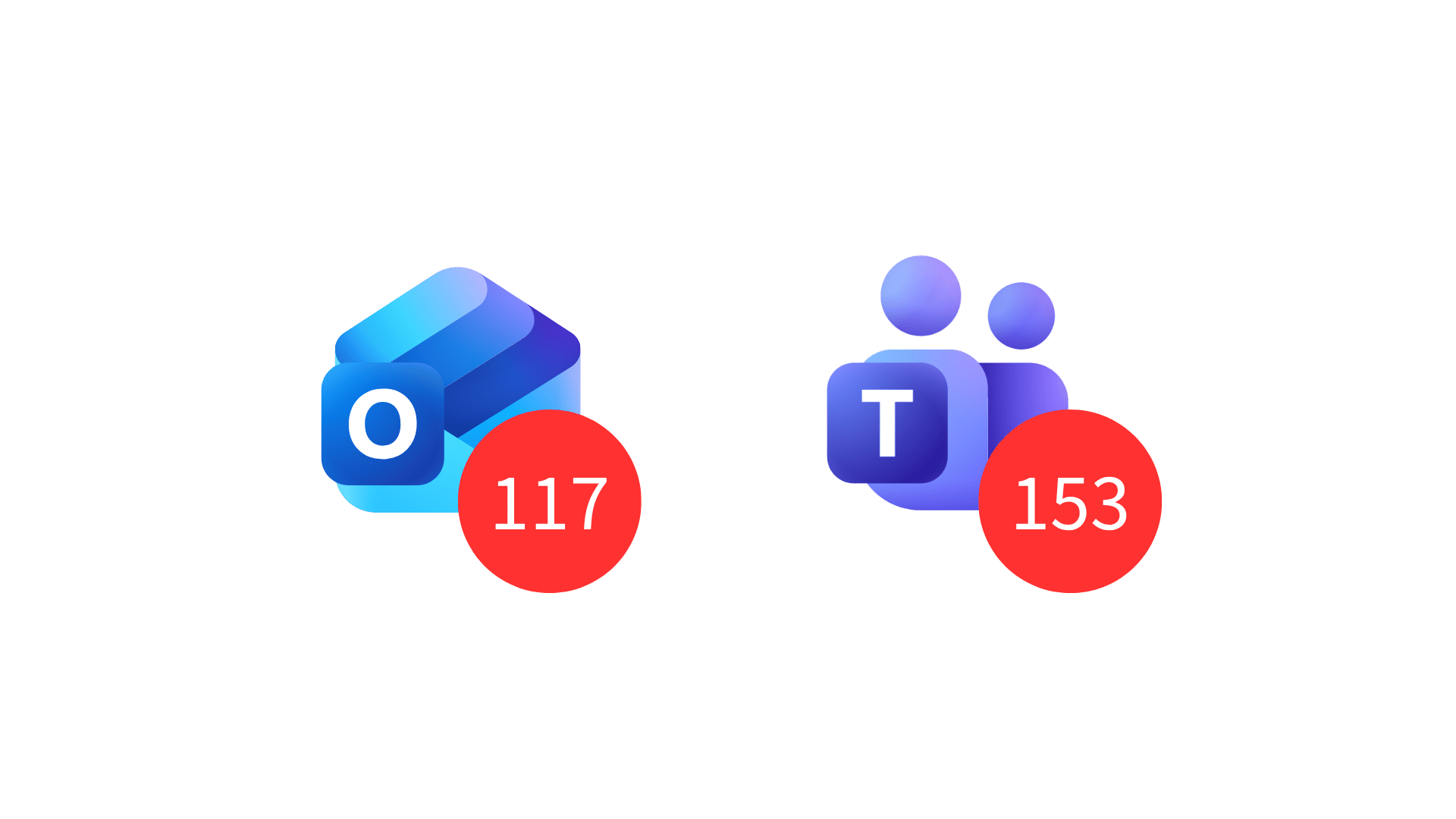
- Many people check their email as early as 6am, and the average worker receives 117 emails and 153 Teams messages per weekday
- 50% of meetings occur during prime productivity windows (9am–11am and 1pm–3pm)
2) The collaboration pattern that quietly breaks hybrid teams
In hybrid environments, two damaging patterns show up:
Pattern A: "Chat-first, memory-last."
- Decisions happen in chat
- Context gets buried
- New team members can't catch up
- Institutional knowledge disappears
Pattern B: "Meeting-as-documentation"
- Meeting = the only shared context
- People attend to stay informed, not to contribute
- More meetings create less time to do work
3) What "async-first" actually means, in practice
Async-first doesn't mean "no meetings." It means:
- Meetings are reserved for places where sync and discussion is really needed
- Everything else becomes discoverable and reusable
Simple rules for an async-first operating system
Use this as a team charter:
Document first
- Plans live in a shared space (SharePoint/OneNote/Loop)
- Every project has a "single source of truth"
Decide in writing
- Decisions are captured in a standard format, for example:
- What we decided
- Why
- Owner
- Date
- Next step
Meet only when the meeting adds value
- Meetings exist for debate, alignment, or relationship work, not status
4) When in-person adds real value (and when it doesn't)
Misunderstanding or not identifying truly valuable uses of time in-office can cause hybrid conflict.
High-value in-person uses
- Trust building
- Brainstorming and conflict resolution
- Rapid alignment on priorities
- Repairing miscommunication
Low-value in-person uses
- Status updates
- Reading slides together
- Meetings that could have been a 3-paragraph memo
If leaders want people onsite, the time must be meaningful! Otherwise, it's just expensive theatre.
5) What M365 telemetry can reveal, without invading privacy
Looking for information certainly helps in finding points of friction in collaboration, but invasive monitoring isn't a good solution either. Luckily, more general aggregate patterns can reveal the places where norms are failing.
Examples of collaboration signals:
- Excessive internal meetings vs. time in creation tools
- Teams chat dominance vs. channel usage
- Repeated meetings with the same people (decision loops)
- "Always-on" messaging outside core hours
Microsoft's Work Trend Index methodology is built on aggregated productivity signals, and looking at these large-scale patterns reveal pain points on a systemic level.
Use telemetry to ask better questions, such as:
- Which teams have rising meeting load but declining outputs?
- Where are decisions not being documented?
- Which groups rely on tribal knowledge (chat + meetings) instead of shared knowledge spaces?
6) Copilot helps with collaboration, but not culture
AI is useful in a number of ways, and while it saves time and resources during meetings, it doesn't fix your intentions for holding them, or the system they're a part of.
Microsoft Teams Copilot can:
- Summarize key discussion points
- Suggest action items
- Answer questions during or after meetings
These can help meetings and catch-up go faster, which is a plus, but if the collaboration design of meetings is broken, you only save small amounts of time in an unproductive system.
How Creospark helps
Clean collaboration can be supported by two foundational principles: security boundaries and modern information architecture.
- If collaboration is messy because sharing boundaries is unclear:
- If collaboration is messy because content is scattered across legacy sites and migrations:
We’ve now seen that hybrid work isn’t settled, and it’s not because of the location of employees. It’s a problem with the behaviour and operating systems of collaboration. Microsoft’s research backs this up with evidence of communication overload and fragmented days. For teams to run smoothly in a hybrid world, they can’t only adopt tools, but must also create norms that protect focus, clarify decisions, and make knowledge reusable.