Author
Prem Chandran
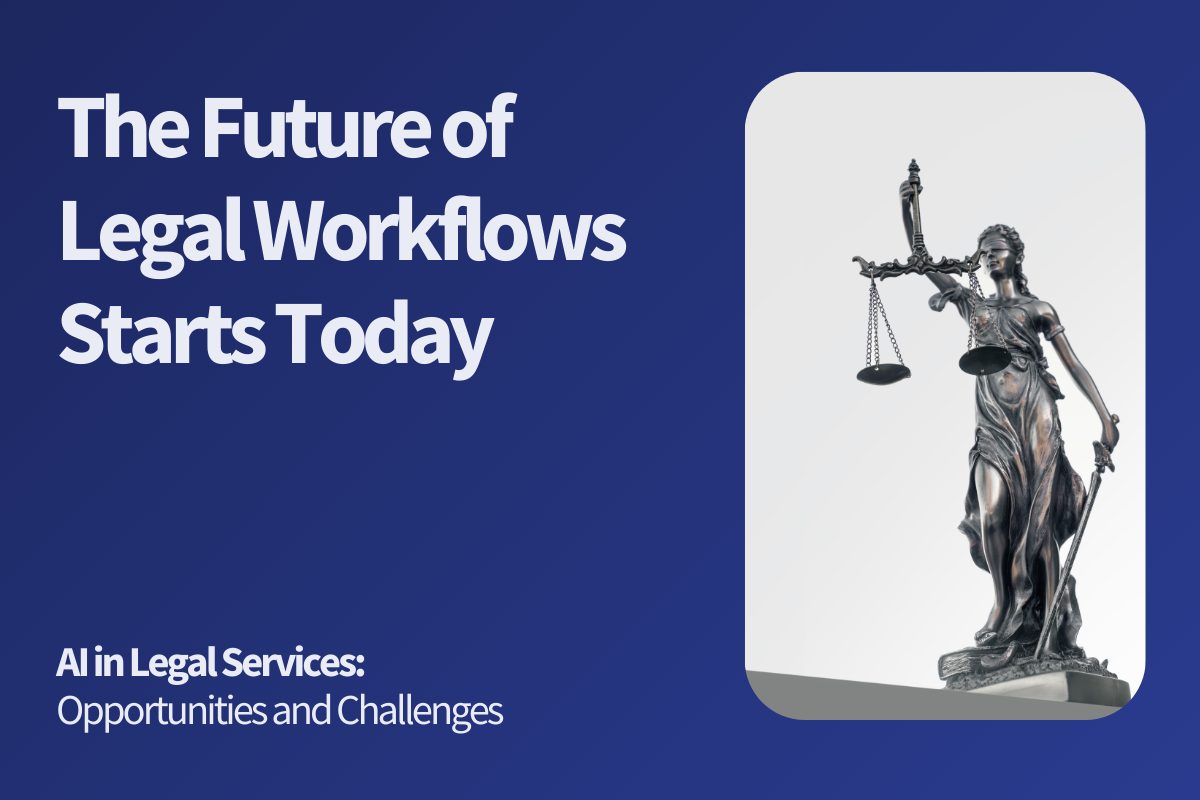
Legal teams work with research, contracts, compliance, and advisory work on a daily basis – which can be tedious and time-consuming. However, technology is evolving, and the use of AI in legal services can enable faster work, improved consistency, and scalable support for legal professionals. While this is exciting, there also exist key adoption challenges in data governance, security, trust, and change management with respect to AI.
Key Opportunities Created by AI in Legal Services
AI is a great productivity assistant for legal teams, particularly with the administrative workload. Generative AI and Copilot can support legal teams by:
- Reducing time spent on repetitive research and document review
- Improving consistency in legal guidance and contract language
- Enabling faster responses to internal legal questions
- Supporting legal self-service for low-risk inquiries
- Helping teams manage growing regulatory and compliance demands
When legal professionals don't have to spend as much time on tedious, repetitive work, they can instead focus on strategic analysis, negotiation, and risk judgement.
How AI Is Changing Legal Workflows
But, how does this work?
Generative AI is good at searching, summarizing, comparing, and drafting information. This is perfect for traditional legal work that is document-heavy, research-intensive, and time-constrained. Lawyers can get a headstart on their work using AI-generated drafts and summaries, instead of starting every task from scratch – as long as the AI insights are grounded in accurate existing legal knowledge.
Even better, Copilot-style tools are being embedded straight into daily legal workflows, and tools that attorneys use on a regular basis. Because of this, legal professionals can use AI directly, in easily understandable language, as they interact with contracts, policies, and other legal documents. Being able to access AI tools in various workflows helps lawyers find the balance between detailed legal analysis and work efficiency, especially for organizations that move quickly.
Copilot Tools and Generative AI in Practice
Copilot, or any generative AI, is not an autonomous decision-maker. Rather, it is an assistant to help lawyers with tasks like drafting contracts, summarizing case law, comparing clauses, and extracting key takeaways from long texts. When connected to approved internal data sources, these tools act as productivity multipliers rather than sources of unverified information
One way to maximize the effectiveness of AI implementations is by embedding AI into existing legal tools and document repositories, so that lawyers can work in familiar environments – rather than constantly switching between systems.
Challenges and Adoption Barriers Legal Teams Must Address
Though there are a lot of potential benefits to AI, its adoption in legal services comes with real challenges that must be addressed early.
Common challenges include:
- Ensuring AI outputs come from approved legal knowledge
- Managing data privacy and confidentiality risks
- Preventing over-reliance on AI for decisions that require human judgment
- Establishing clear governance and escalation paths
- Building trust among legal professionals and stakeholders
It’s certainly possible for AI to amplify risks and not reduce them, without proper controls in place.
Governance and Human Oversight Are Essential
Legal AI needs to operate within strict governance frameworks. For example, the systems and procedures where AI is embedded must be designed to keep humans in the loop. AI can support professional judgement, of course. It shouldn’t replace it. Teams need to define clear policies about AI, defining what it’s allowed to help with, times when human review is necessary, and guidelines on how AI output should be audited. Approaches like these can give firms the productivity benefits of AI while maintaining accountability and compliance at the same time.
The use of AI in legal services reveals impactful opportunities in improving efficiency, consistency, and scalability for law firms. But, successful adoption depends less on the technology, and more on the governance, data quality, and trust built by organizations. For legal teams to harness the value of AI responsibly, they must position themselves to approach AI as an assistive tool rather than a replacement of human reasoning.
Ready to get started with Copilot?
Creospark is a recognized Microsoft Solutions Partner, collectively bringing together more than 60 years of Microsoft expertise, Microsoft MVP staff, and over 40 Microsoft certifications. We've worked with some of the biggest names, so you can trust us to deliver results.